







 English




Why was the resignation of the Minister of Education demanded in Sweden?
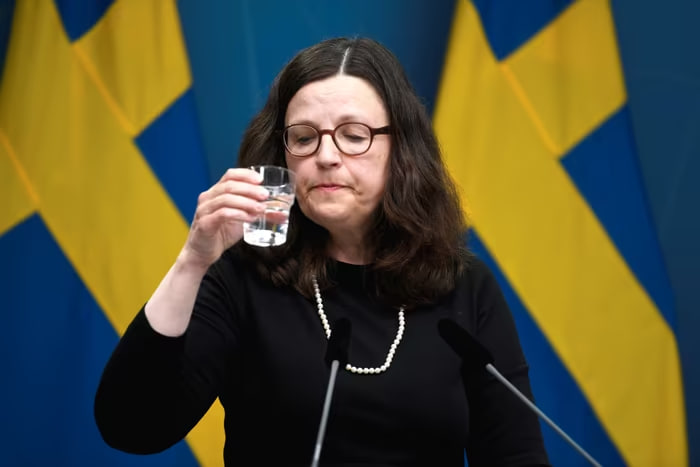
In 2015, Sweden's PISA results were close to the OECD average. From 2006 to 2012, Sweden's scores declined, which was perceived as an important point of discussion for many political parties, including the Union and the Social Democratic Party.
In the 2015 PISA report, Sweden's results have risen for the first time since they began in 2006. However, Sweden's 2021 PISA results will cause widespread discussion.
The reason for this is that in the spring of 2021, the Swedish newspaper "Expressen" published several articles about the problems that arose during the PISA tests conducted by the National Agency for Education.
That is, during PISA surveys, a large number of students in some schools are exempted from the test, which has led to artificial good test results.
That is, if difficult or low-performing students are not included in the test, their low scores will not affect the overall result. As a result, if only well-prepared students are rated, the average score appears high, and the test results are shown as "improved." Therefore, the deputies assess that the tests did not serve their true purpose.
Following this, the Swedish Democratic Party (SD) proposed a vote of no confidence to the Minister of Education, Anna Ekström, asking her to resign.
They say there are serious doubts about the Minister of Education trying to "improve" some results in the PISA assessment. Deputies call this a "deliberate attempt to show off the country's educational level."
Some deputies say that the minister misled the people, hiding low results, ignoring factors affecting statistics, and as a result, manipulating PISA indicators.
Minister of Education Anna Ekstrom denied all accusations, saying that the ministry did not try to "improve" the results, but rather that the technical aspects of the PISA process were misinterpreted.
"My only goal is to get accurate information about students' knowledge," Minister Anna Ekstrom said at the time.
A similar situation was observed in Uzbekistan in 2025. That is, the Ministry of Preschool and School Education was accused of attempting to artificially increase PISA 2025 results. These accusations were linked to the fact that all presidential schools are participating in the PISA 2025 study.
In response to these accusations, former minister Hilola Umarova said that the ministry does not interfere at all in the process of selecting schools, and the ministry does not need deception. However, the ministry will not provide further explanations on this matter.
Andreas Schleicher, the founder of the PISA study, says that all presidential schools are participating in the studies in Uzbekistan as an additional group, and the Uzbek side asked to add these schools.
It is noteworthy that none of the deputies from Uzbekistan paid any attention to this topic at that time.
Comments 0
Please register to comment!



News
“Aravani tortolmagan kadr bizning oramizda bo‘lmaydi” — Erkinjon Turdimov
O‘qituvchilar attestatsiyasini o‘tkazuvchi markaz boshqa tashkilotga qo‘shib yuborildi
Ta’lim va ilm-fan vaziriga o‘rinbosarlar tayinlandi




Edit your comment