







 English




School Principal Jailed Over Distribution of Teaching Hours
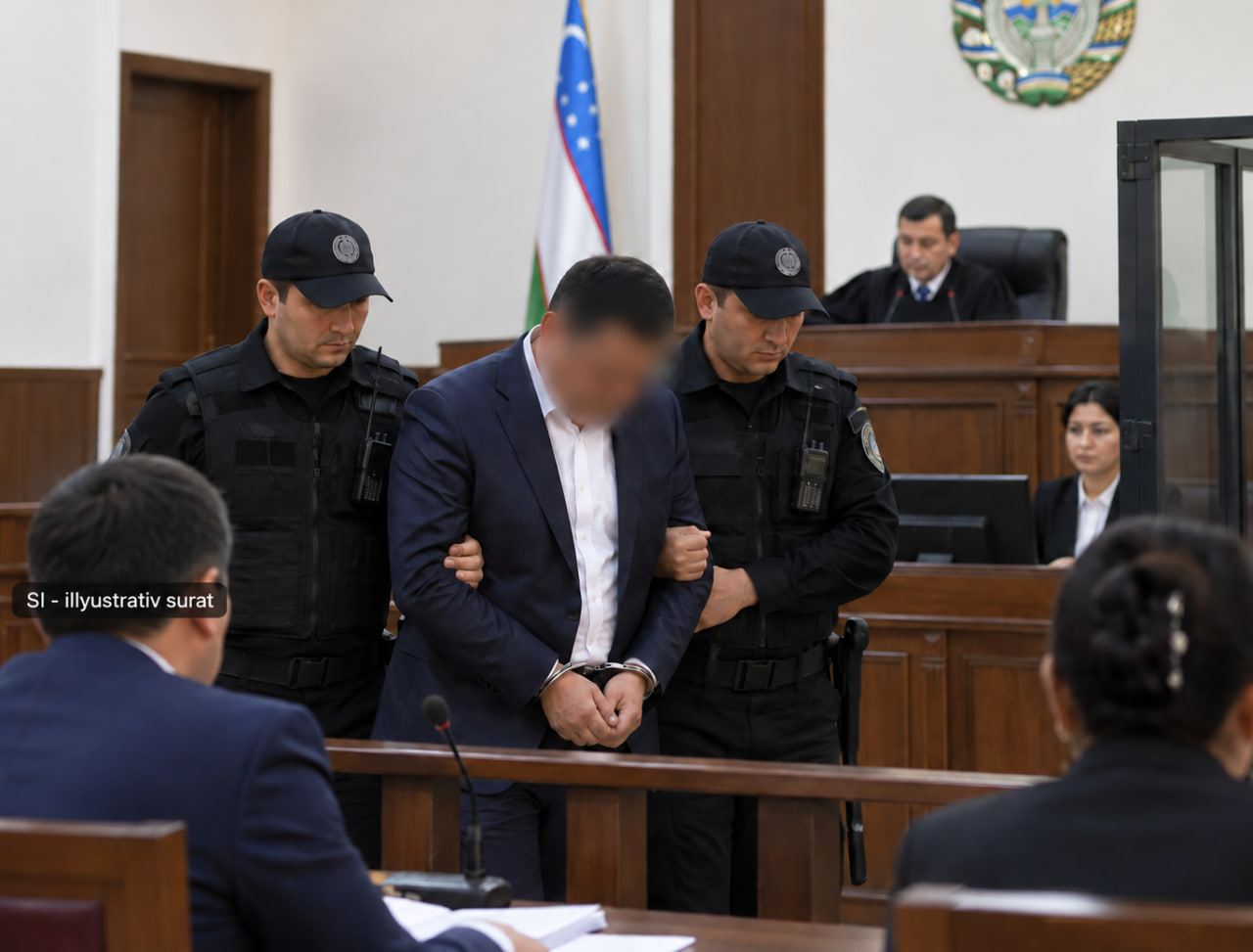
The principal of a general secondary school in Chiroqchi district, Kashkadarya region, was sentenced to imprisonment after demanding $700 from a teacher in exchange for allocating additional teaching hours. He was caught receiving $400 during an undercover operation. This was revealed in a judgment issued by the Shahrisabz District Criminal Court on August 20, 2026.
According to the court document, the defendant had been working as the principal of one of the schools in Chiroqchi district since June 30, 2022. His official duties included general management of the school, hiring and dismissing teachers, and chairing the commission responsible for distributing teaching hours.
According to the criminal case materials, a history teacher at the school told the principal that he had been assigned too few teaching hours and asked him to provide additional hours for the new 2026–2027 academic year.
The principal then demanded $700 in exchange for allocating 10 additional teaching hours. According to the victim’s testimony in court, the principal initially demanded $1,000 for this “service.” After the teacher explained his family circumstances, the amount was reduced to $700.
The teacher was unable to find the entire amount immediately. He initially gave the principal $50 and said he would pay the remaining amount later. The principal subsequently demanded that he find and provide the rest of the money. The teacher then contacted law enforcement authorities.
On May 29, 2026, the teacher was provided with $400 as part of an undercover operation. Special markings were placed on two $100 banknotes, and the notes were chemically treated. The teacher was also given an audio recording device to record his conversation with the principal.
The teacher met with the principal in the office of the deputy principal responsible for spiritual and educational affairs. During the conversation, he said that he had brought $400 and handed the money to the principal.
The judgment states that the teacher reminded the principal that he had previously given him $50, informed him that he was handing over another $400, and asked how much remained from the agreed amount. The principal responded in substance, “You can calculate it yourself.” The teacher said that he would give the remaining $250 in August, when the teaching hours were being distributed. The principal agreed.
Shortly afterwards, officers conducting the operation entered the school and found the $400 handed over by the teacher in the principal’s pocket. The money was subsequently documented in accordance with the established procedure.
In court, the principal did not fully admit his guilt. He claimed that he had not demanded money from the teacher in exchange for teaching hours, but had asked him for a personal loan. According to his testimony, the teacher had brought the money voluntarily, while the principal had asked to borrow approximately $450 rather than $700. The principal also stated that the distribution of teaching hours fell within the authority of a commission established at the school, rather than his own authority. The court, however, rejected these arguments.
After assessing the principal’s official duties and other evidence in the case, the court found that his statements had been made in an attempt to avoid criminal liability. In particular, the court noted that the relevant appendix to Order No. 156 of the Minister of Preschool and School Education dated May 16, 2025, lists among the duties of a general secondary school principal the authority to approve class schedules, staffing schedules and teacher workload/tariff lists.
The court also took into account explanations issued by the Plenum of the Supreme Court concerning bribery-related cases. According to these explanations, even if an official does not have direct authority to carry out a particular action, the official may still be considered a subject of a bribery-related offence if, by virtue of their position, they can facilitate the performance of that action by another official.
Initially, investigators classified the principal’s actions under clauses “a” and “v” of Part 2 of Article 210 of the Criminal Code as repeated receipt of a bribe and receiving a bribe through extortion. However, the court changed the legal classification.
According to the court’s findings, the initial receipt of $50 and the subsequent receipt of $400 did not constitute separate repeated offences. Instead, they were considered acts forming part of a single continuing offence.
The court also concluded that the element of extortion was absent. The principal had not threatened the teacher with harm to his lawful interests and had not deliberately placed him in circumstances that forced him to pay money in order to prevent adverse consequences. The court found that the principal had demanded the money by using the opportunities associated with his official position. Therefore, his actions were reclassified under Part 1 of Article 210 of the Criminal Code as receiving a bribe.
When determining the sentence, the court took into account that the principal had no previous convictions, as well as his family and financial circumstances, a petition submitted by the school’s students in his support, and an appeal from the school’s trade union council asking the court to take his work into consideration.
At the same time, the court noted that the crime committed posed a serious threat to the mechanisms of public administration and to the economic and moral foundations of society. The court concluded that it was impossible to rehabilitate the principal without isolating him from society.
As a result, the court found the principal guilty of the offence provided for under Part 1 of Article 210 of the Criminal Code and sentenced him to two years’ imprisonment. In addition, he was deprived for two years of the right to hold positions involving managerial and financial responsibility in educational institutions. He is to serve his sentence in a settlement colony.
The court also ordered the principal to pay 599,891.50 soums to the state, equivalent to the $50 that constituted the subject of the bribe, as well as 84,823 soums in expert examination costs. The parties were informed of their right to appeal the judgment or file a prosecutor’s protest within 10 days from the date they received the judgment.
Comments 3
Please register to comment!



News

Ta’lim tizimida psixologik xizmatni rivojlantirish bo‘yicha yangi tizim joriy etiladi
“Aravani tortolmagan kadr bizning oramizda bo‘lmaydi” — Erkinjon Turdimov
O‘qituvchilar attestatsiyasini o‘tkazuvchi markaz boshqa tashkilotga qo‘shib yuborildi
Ta’lim va ilm-fan vaziriga o‘rinbosarlar tayinlandi
News on the topic
 News
News
Maktab farroshligi uchun 1500$, bog‘cha tarbiyachiligi uchun 500$ olgan direktorlarga ozodlikni cheklash jazosi tayinlandi
Surxondaryo viloyati maktabgacha va maktab ta’lim tizimida fuqarolarni ishga joylash evaziga pora olish va pora berish bilan bog‘liq holat aniqlandi, ta’lim tashkiloti rahbarlariga sud hukmi bilan tegishli jazolar tayinlandi. Xalqtaliminfo.uz sud hujjatlari bilan tanishdi.
 Вы спрашивали
Dars soatlari taqsimoti qonuniy va adolatli amalga oshirilganmi?
Biz, 1-toifali ikki nafar yosh o‘qituvchi, ko‘proq dars soati olishni so‘rashimiz mumkinmi? Shuningdek, ikkovimizda ona tili fanidan milliy sertifikat ham mavjud. Direktorimiz esa boshlang‘ich sinf o‘qituvchilarining ona tili fanidan olgan milliy sertifikati dars soatlarini taqsimlashda hech qanday ta’sir qilmasligini va uni inobatga olmasligini aytmoqda.
 Вы спрашивали
O‘qituvchi bir nechta ko‘rsatkichga ega bo‘lsa, ko‘proq dars oladimi?
Dars taqsimotida milliy yoki xalqaro tan olingan sertifikat birinchi va ikkinchi malaka toifasiga nisbatan yuqori ko‘rsatkich hisoblanadi. Bunda o‘qituvchi belgilangan ko‘rsatkichlarning bir nechtasiga ega bo‘lganda, ko‘rsatkichlarning eng ustuvorini inobatga olgan holda dars soatlari taqsimlanadi.
 Вы спрашивали
Pensiyaoldi yoshidagi, o‘rta-maxsus ma’lumotli pedagogni ishdan bo‘shatish to‘g‘rimi?
Maktabgacha va maktab ta’limi vazirning 2025-yil 23-oktabrdagi 398-sonli buyrug‘i bilan sinf rahbarlariga qo‘yilgan oliy pedagogik ma’lumotga ega bo‘lish talabi butunlay bekor qilingan.
Edit your comment